How to Find Coworking Spaces Loved by Startups in Major US Cities
Choosing a coworking space is a business strategy decision, not a real estate one, or at least, it should be treated that way. The people sitting two desks away, the events on next month’s calendar, and whether a seed-stage VC has ever walked through the front door can shape where your startup goes in ways that a cheaper rent deal simply cannot. That is the part most “best coworking spaces” roundups miss entirely.
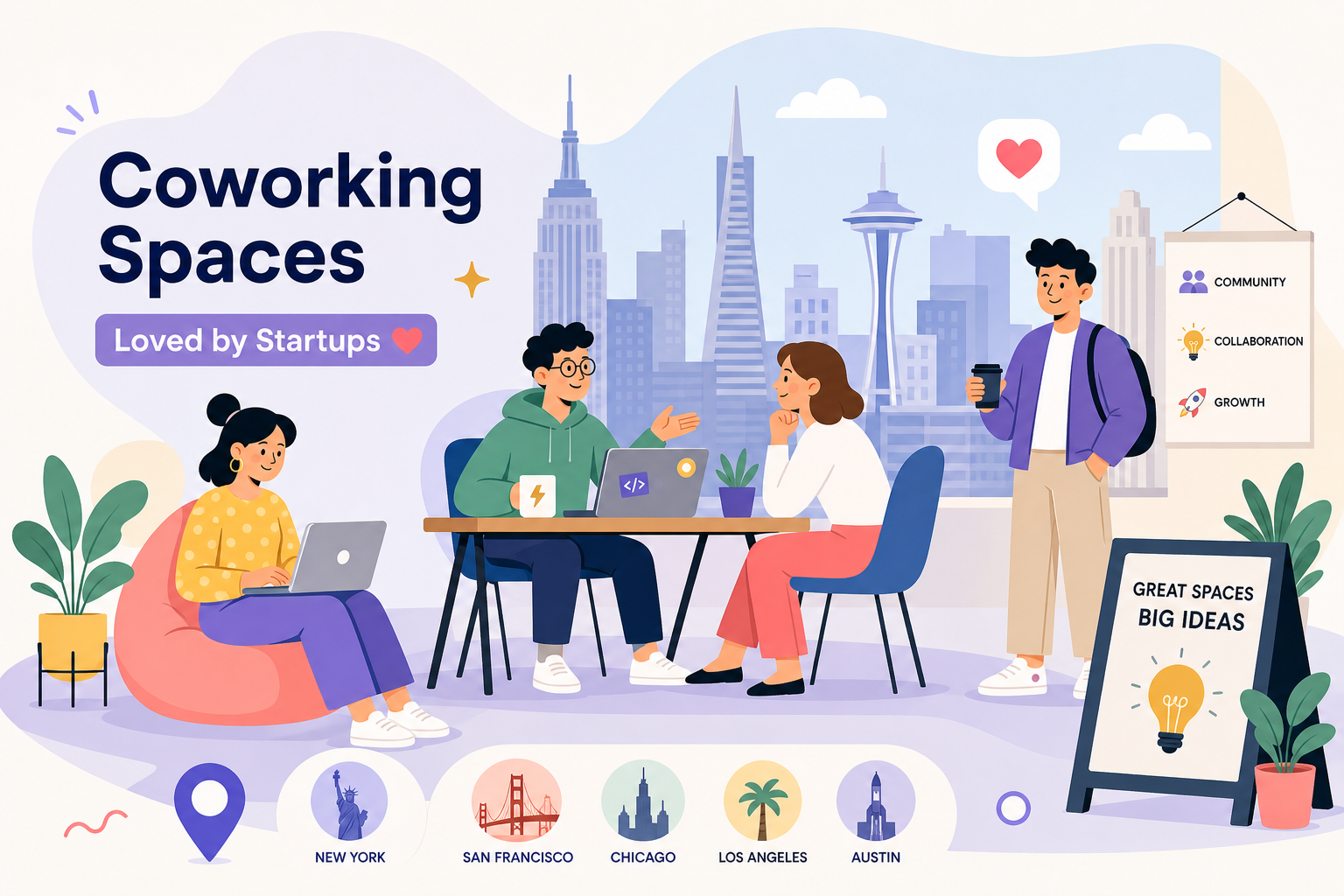
This guide explains how to find coworking spaces popular among startups in major US cities, and why community signals matter more than rent. It is written for founders, side hustlers, and startup-minded professionals who want more than a branded desk in a generic flex office. They want an environment that actively accelerates their thinking. If that sounds like you, here is how to find one that earns its monthly fee.
What follows covers the best discovery platforms, the specific signals that separate a startup hub from a lifestyle coworking space, a city-by-city snapshot of NYC, SF, Austin, and Chicago, a clear look at what membership actually costs, and a practical checklist to shortlist the right space without burning weeks on tours.
How to Find Coworking Spaces Popular Among Startups: Where to Start
Searching “coworking near me” or “best coworking in [city]” returns a wall of SEO-optimized directory pages that all look identical and tell you very little about community quality. A more practical first stop for finding coworking spaces popular among startups runs through two dedicated platforms and a few community channels that most people overlook.
Platforms built for coworking discovery
Deskpass and Coworker are worth starting with. Deskpass operates as a membership pass giving access to a curated network of spaces across major US cities, with day-pass and monthly subscription options. Coworker functions more like a global directory with filters for city, amenities, and price range. Both let you read member reviews, compare layouts, and book trial days before committing to a full membership.
One filter worth using immediately on both platforms: search for spaces that list “events” or “community programming” in their amenities. Many traditional office providers emphasize desk and space features over community programming, so a visible events calendar is a useful positive signal. A space that publishes one is already telling you something different about who its members are and what the operator is trying to build.
Community-driven discovery channels
The most useful coworking recommendations come from actual founders, not aggregator pages. Local Slack communities, city-specific tech subreddits, and forums like Indie Hackers surface real opinions from people who have signed up, stayed, and in some cases left. LinkedIn is underrated here: searching “coworking” plus a city name in the posts section often surfaces first-person founder takes posted within the last few months, which is far more current than any directory.
Startup ecosystem newsletters, accelerator alumni groups, and local founder meetups are equally useful. When someone at a demo night mentions where their team works, that is a warmer signal than anything a marketing page can offer. Ask the question directly and most founders will tell you exactly what they found and what they wished they had known sooner.
What “Startup-Friendly” Actually Signals in a Coworking Space
Every coworking space in existence describes itself as “community-driven” and “perfect for startups.” That language is meaningless without specific evidence. The signals below consistently separate a real startup hub from a space that just uses startup-friendly copy.
Event frequency and the demo night test
A coworking space hosting pitch nights, demo days, founder dinners, or investor panels on a steady monthly cadence is functioning as a startup hub by design. That kind of programming does not happen by accident. It signals that the operator has built a startup-oriented network and has the relationships to fill the room. Spaces like Bond Collective in NYC and RocketSpace in San Francisco have built their reputations specifically on this kind of consistent programming.
Event cadence is a better proxy than desk count or amenities. It tells you about the people in the building, not just the furniture. Before any tour, pull up the events page and check whether startup-specific programming appeared in the last 30 days. If the calendar is empty or only shows generic “happy hours,” move on.
Investor access and accelerator tie-ins
There is a real difference between a space that has “networking events” in its marketing copy and one that has documented relationships with accelerators or VC firms. Workville in NYC, for example, houses graduates from Y Combinator and Accenture accelerator programs, which creates structured investor touchpoints rather than accidental hallway conversations. RocketSpace in San Francisco explicitly positions itself as a coworking-accelerator hybrid and helps startups prepare for funding conversations.
When evaluating a space, look for specific claims: alumni startups that raised rounds, an accelerator in residence, or a VC on the advisory board. Vague proximity to “the startup ecosystem” is not the same thing as a formal relationship that puts investors in the building regularly.
Founder density: why room composition matters
Founder density is the ratio of startup operators to solo freelancers in the member base. A space where most members are early-stage teams creates a very different daily environment than one split between startup founders and independent consultants, regardless of how nice the espresso machine is. Before joining, ask the space for an approximate member breakdown, look at who is speaking at their events, and search LinkedIn for people who list the coworking address on their profiles. That quick pre-visit audit will often filter out poor fits before you ever schedule a tour.
Best Coworking Spaces by City: A Startup-Focused Snapshot
Each major startup city has a distinct coworking ecosystem shaped by its industry mix, cost base, and investor density. Here is a working mental map of four of the most active markets for founders looking for shared office space built around startups.
Best coworking spaces in NYC for startups
NYC has over 450 coworking spaces in the city proper, the largest raw count in the US. The startup-focused options cluster in Midtown, Flatiron, and Brooklyn (especially DUMBO and Gowanus). AlleyNYC, Cowork|rs, Spark Labs, The Yard, and Bond Collective each occupy distinct niches, with some skewing toward fintech and media and others toward consumer and e-commerce. Spark Labs goes further than most, offering legal, development, and marketing support services alongside its standard workspace. For a broader orientation to the local market, consult a comprehensive guide to coworking in NYC that maps the major neighborhoods and offerings.
NYC’s scale creates a specific risk: community fragmentation. Consider a fintech founder choosing between a vertical-focused space and a massive generalist provider, the niche space wins almost every time on community quality. Prioritize fit over square footage when searching for incubator coworking spaces or startup-focused options in this market.
San Francisco and Austin: proximity to capital
SF’s startup coworking scene remains tightly linked to the VC ecosystem, even after the market contraction following 2020. The activity has reconsolidated around SoMa and the Financial District. Spaces like CANOPY position themselves explicitly around AI startup networks and VC access, while StartupHQ in SoMa is built specifically for founder teams. PARISOMA offers a program called TARMAC for international founders navigating the San Francisco market, which is a specific and practical differentiator.
Where SF anchors to established VC networks, Austin has grown sharply as a startup destination and its coworking scene reflects that momentum. Capital Factory is the standout for accelerator programming, hosting pitch competitions and demo days with structured mentorship and funding support. The lower cost base compared to NYC or SF makes Austin particularly attractive for bootstrapped teams or those relocating from higher-cost markets. East Austin and university-adjacent corridors are where most of the startup energy concentrates.
Chicago: an underrated startup coworking hub
Chicago is among the more active US coworking markets, and its startup scene is more dynamic than its reputation outside the Midwest suggests. The most startup-relevant spaces cluster in River North, the Loop, and Fulton Market. Chicago’s startup ecosystem skews toward CPG, logistics, and fintech, which shapes the community composition inside its best coworking spaces. For founders in those verticals, Chicago can offer more relevant peer density than a generalist hub in a more expensive city. It is worth spending more time evaluating than most startup guides give it credit for.
What Membership Costs Look Like and What to Expect
Hot desks in major US cities run roughly $195 to $400 per month. Dedicated desks range from $300 to $700 per month depending on the city and how the space positions itself. Premium startup-focused spaces in NYC or SF push toward the top of that range, particularly when structured programming, mentor office hours, or investor event access are bundled into the membership. In NYC specifically, startup-oriented spaces like Workville and Bond Collective typically price dedicated desks toward the upper end of the market, though rates vary by neighborhood and package, so confirm directly with each space before budgeting. For a detailed breakdown of typical pricing and what drives those costs, see this guide to how much a coworking space costs.
Day passes through Deskpass typically run $25 to $50 per visit, which is the smartest way to test community fit before signing anything monthly. One trial day at a pitch night or a founder dinner will tell you more about whether the room is right for you than any amount of desk research.
The value difference between startup-focused and general coworking is community infrastructure, not furniture. Standard coworking gives you Wi-Fi, printing, a kitchen, and meeting rooms. Startup-focused coworking adds monthly networking events, mail and business address services, mentor office hours, and sometimes virtual office tiers for distributed teams. If a space charges a 30 percent premium over its neighbors, check its event calendar and alumni roster to see whether that premium is earned.
A Practical Framework to Shortlist and Choose Fast
Bringing all of these criteria together into an action sequence keeps the search from becoming a time sink. Most founders spend too long on tours and not enough time on pre-visit research that would eliminate half the options in 30 minutes.
How to find coworking spaces popular among startups: 30-minute pre-visit checklist
Start with the event calendar: are there startup-specific events scheduled in the next 30 days? Then run a LinkedIn member scan to find active founder profiles listing the space’s address. Finally, check Deskpass or Coworker for day-pass availability so you can visit before committing. These checks eliminate most spaces that look startup-friendly from the outside but function as general flex offices in practice.
Questions to ask on your visit
The questions that reveal community depth fastest: How many startups are currently members? When was the last investor event or demo night? Do you have a formal relationship with any accelerators or VC firms? What percentage of members have been here over a year? Spaces that struggle to answer those questions clearly are telling you something important about how they actually operate versus how they market themselves.
The commitment principle for early-stage founders
Start with a monthly membership, regardless of what discount is offered on an annual plan. Startups change fast. A space that fits a two-person pre-product team often does not fit a 10-person team preparing for a product launch. Build in optionality at the cost of a small monthly premium. The flexibility is worth more than the savings.
The Right Space Is a Growth Lever, Not Just Overhead
Finding a coworking space that puts you next to other founders, in front of investors, and inside a community of people actively building things changes the daily texture of startup life in ways that a private office or a kitchen table cannot replicate. The desk is the least important part of what you are buying.
Use these steps to find coworking spaces popular among startups in major US cities before committing to a lease: start on Deskpass and Coworker, filter by event cadence and accelerator ties, verify community history through LinkedIn and Crunchbase, visit on a day pass, and ask the direct questions on your tour that separate genuine startup hubs from spaces that just use the language.
The founders who get the most out of these environments show up already thinking like operators: they know how to evaluate a business model, read a room, and ask the right questions. If you want to sharpen that thinking before you walk in the door, CasualMBA breaks down the business frameworks and startup strategy worth knowing, one concept at a time. The room is better when you arrive ready to use it.