Trump Cryptocurrency Earnings: The $1.4 Billion Breakdown
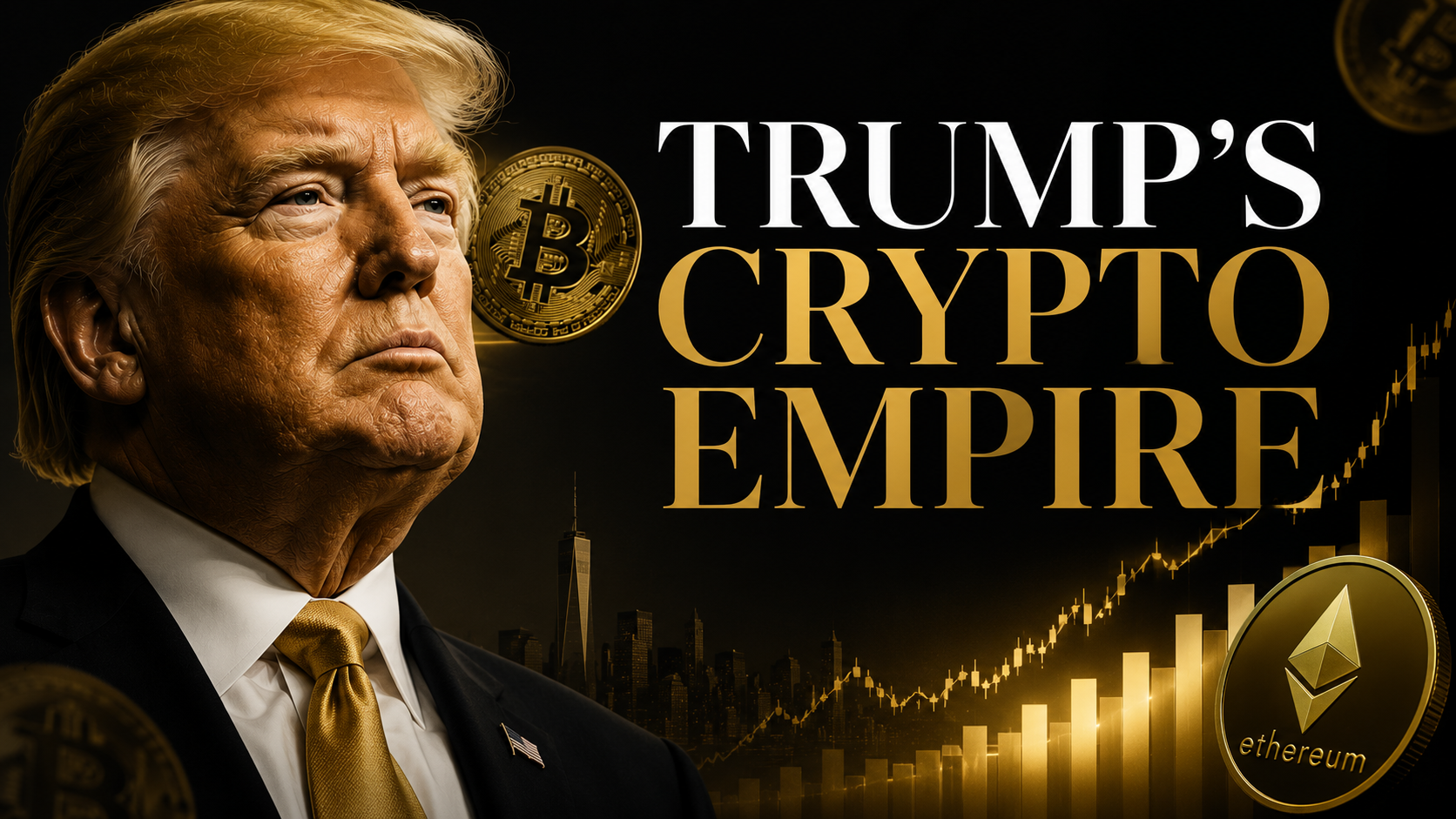
Trump’s cryptocurrency earnings in 2025 crossed $1.4 billion. This figure came from his annual financial disclosure filed with the U.S. Office of Government Ethics on June 30, 2026. The document runs to 927 pages. Barack Obama’s final disclosure was eight pages. Joe Biden’s was eleven.
The scale of these earnings makes this one of the most significant intersections of political power and private finance in modern American history. The business model behind it is worth understanding clearly.
What Trump actually earned and from where
The $1.4 billion in crypto earnings came from three primary sources.
Celebration Coins paid him $635 million in royalties through a licensing agreement.
The second major source was World Liberty Financial, the decentralised finance and stablecoin venture co-founded by Trump, his sons Eric, Donald Jr., and Barron, and business associates. Token sales from World Liberty Financial generated over $500 million in net proceeds.
Beyond income, Trump also reported holding over $50 million in Bitcoin and between $5 million and $25 million in Ethereum among his direct cryptocurrency holdings.
The business model behind $TRUMP meme coin
Understanding how Trump earned $635 million from a meme coin requires understanding how meme coin licensing actually works.
A meme coin is a cryptocurrency that derives its value primarily from cultural association, celebrity endorsement, and speculative momentum rather than any underlying technology or utility. Unlike Bitcoin which is designed as a store of value, or Ethereum which powers smart contracts, a meme coin’s value is almost entirely psychological — it is worth what people believe it is worth.
The licensing model works like this: a celebrity or public figure licenses their name, image, and promotional power to a group that creates and distributes the coin. The licensor receives royalties on trading volume or token sales while the group handles the technical creation and distribution.
The $TRUMP meme coin has taken a significant dive since its introduction, losing more than 90% of its value. This means the people who bought the coin at or near its peak have lost most of their investment, while the licensing income was earned primarily from the early surge in trading volume when the coin launched.
This asymmetry — where the promoter earns from volume regardless of whether buyers profit — is central to the ethical debate surrounding the disclosure.
What World Liberty Financial is
World Liberty Financial is a more structured business than a meme coin and deserves a separate explanation.
It is a decentralised finance platform — meaning it operates on blockchain infrastructure without a traditional central authority like a bank. Its stated focus is on stablecoins, which are cryptocurrencies designed to maintain a fixed value pegged to a fiat currency like the US dollar.
The co-founders include Trump, his sons, and Steven Witkoff, a top diplomat in his administration. Zach Witkoff, the special envoy’s son, serves as chief executive officer.
The business model of a DeFi platform typically involves token sales — selling a proprietary cryptocurrency token to investors who gain access to the platform’s services or governance — and transaction fees on activity within the platform. Token sales from World Liberty Financial generated over $526 million in net proceeds for Trump in 2025.
The conflict of interest question
The reason this disclosure is generating significant attention beyond the sheer scale of the numbers is the conflict of interest it implies.
Trump has made pro-cryptocurrency regulation a cornerstone of his second term — backing executive actions to position the United States as what his White House described as “the crypto capital of the world,” supporting legislation like the GENIUS Act, and appointing crypto-friendly regulators.
The filing came one day after a landmark Supreme Court ruling. That ruling expanded presidential authority over independent federal agencies. It drew fresh attention to Trump’s role in both crypto and regulation.
Democrats opposed to the Clarity Act — which would legalise most crypto activity in the United States and has passed the House but remains in limbo in the Senate — have argued that the bill should not be passed without ethics language that bars the president and his family from engaging in cryptocurrency-related businesses.
The White House’s response to questions about conflicts of interest was straightforward: “Neither the President nor his family has ever engaged — or will ever engage — in conflicts of interest.”
What this means as a business story
Setting aside the political dimensions, the Trump crypto empire is an interesting business case study in personal brand monetisation at an extreme scale.
The underlying mechanism is not new. Celebrities have licensed their names to products for decades. What makes the Trump crypto situation unusual is the scale, the speed, and the direct intersection with regulatory power.
A sitting president who earns $635 million from a coin that derives its value partly from his continued political prominence — and who simultaneously controls the regulatory environment for that industry — represents a business arrangement with few historical precedents in American public life.
Whether that arrangement is legal is for courts and Congress to determine. Whether it is an interesting business model is not in question — it is one of the most lucrative personal brand licensing operations in modern history, generating over a billion dollars in a single year from digital assets that did not exist in any meaningful form five years ago.
The MBA concept at the centre of this story is one we have covered on CasualMBA before — brand equity and what it can be leveraged to do. Trump’s name is among the most globally recognised in the world. In 2025, that recognition was converted into cryptocurrency income at a scale that illustrates just how far personal brand monetisation has evolved.
Understanding business means understanding that the most valuable asset a person can own is not a property or a company — it is the association their name creates in millions of minds simultaneously.
Startup takeaway:
“Brand equity is not just a marketing concept. At sufficient scale, a name alone can generate a billion dollars. The question is always what you do with that leverage.”