Learn Business English: Key Terms Every Entrepreneur Needs
Picture this: you’re watching a founder interview on YouTube, or sitting in on a startup podcast, and within the first five minutes you hear “burn rate,” “runway,” “pivot,” and “go-to-market strategy” back to back. You nod along. You keep listening. But somewhere in the back of your mind, you’re aware that you’re missing context that everyone else in the room seems to already have.
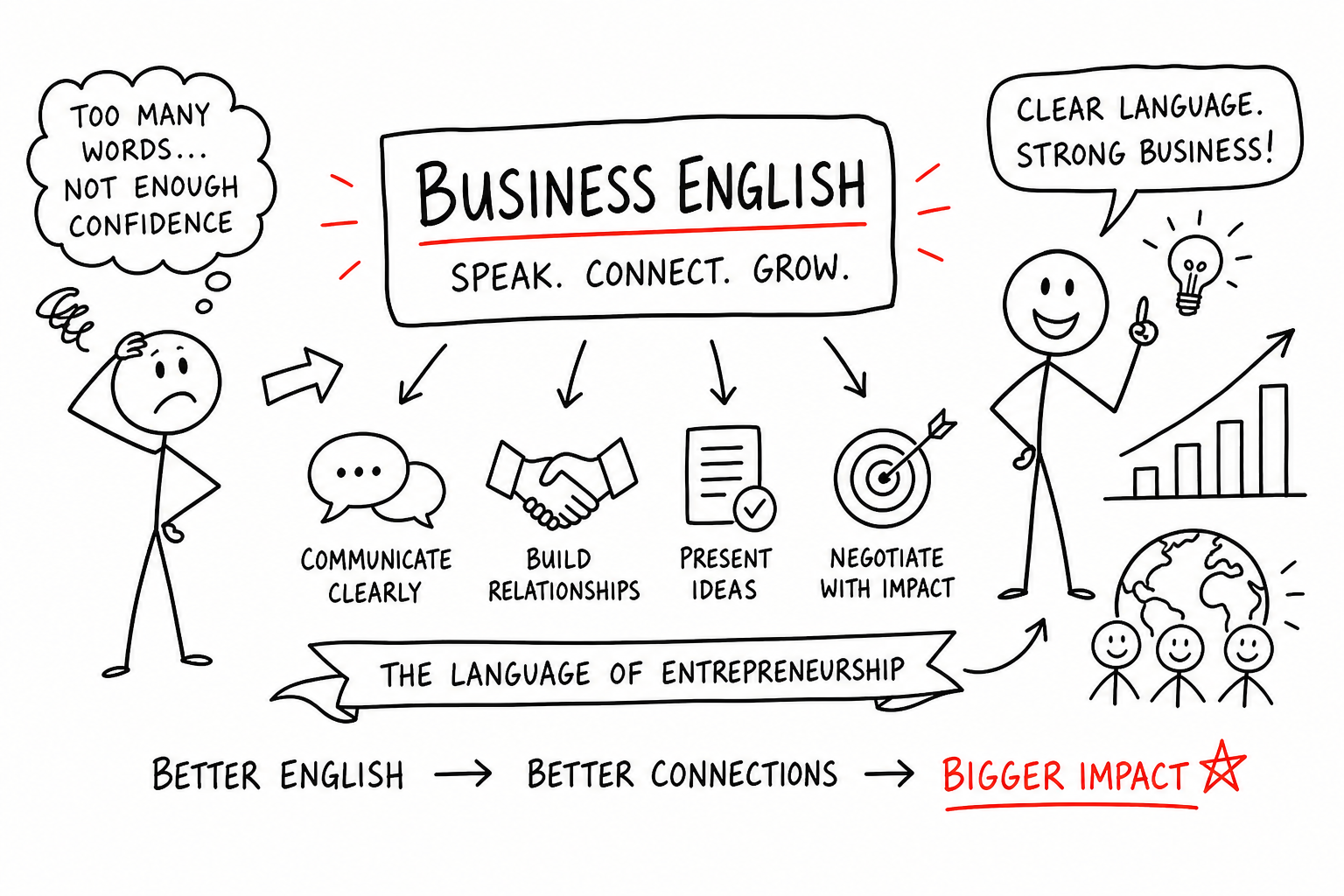
If you want to learn English for business, the fastest path is mastering the core vocabulary that founders, investors, and operators actually use. Not textbook definitions, real terms applied to real companies. Business jargon often feels hard not because the ideas are complex, but because most people were never taught the language in the first place. That’s the gap CasualMBA exists to fill: a free weekly newsletter breaking down these concepts through startup stories you already recognize. This article does the same thing, right now. By the time you finish reading, you’ll have a working vocabulary of the most important business English terms every aspiring entrepreneur needs, explained in plain language with real examples.
Why business jargon exists and what it’s actually doing to you
Business English didn’t evolve to be confusing on purpose. It developed inside boardrooms, VC offices, and MBA classrooms where everyone in the room already shared the same vocabulary, shorthand for people already in the club. Outsiders were simply never the intended audience.
Think of it like walking into a professional kitchen where the chef is calling out instructions in classical French culinary terms. The food is still food. The knife is still a knife. But if you don’t know that “brunoise” means a very fine dice, you’re slower and less useful than everyone else on the line. Not knowing these words doesn’t reflect your intelligence. It reflects access, nothing more.
The gatekeeping problem with business vocabulary
Specialized vocabulary creates an in-group and an out-group, and startup culture is full of it. Investors, founders, and operators use these terms constantly in pitches, investor updates, and strategy meetings. If a term is opaque to you, you’re operating at a disadvantage. You might misread a pitch deck, underestimate a risk, or fail to communicate your own idea clearly because you’re reaching for the wrong words.
What fluency in business terms actually unlocks for a founder
Fluency here doesn’t mean sounding impressive. It means you can read a financial model without freezing, spot red flags in someone else’s pitch before they become costly, and communicate your vision in the language your audience expects. Before you have this vocabulary, entrepreneurial conversations feel like listening to a foreign language. Once it clicks, you don’t just talk more confidently, you start thinking more clearly as a founder.
Learn English for Business: Money Terms Every Founder Needs
Financial vocabulary comes up almost immediately when someone starts a business or follows startup news. These three terms are foundational, frequently misunderstood, and almost guaranteed to appear in any serious business conversation.
Burn rate: how fast you’re spending money
Burn rate is the speed at which a company spends its cash before it generates positive cash flow. If a startup pays $30,000 in salaries, $10,000 in rent, and $10,000 in software and ads each month, its burn rate is $50,000 per month. Investors routinely ask about burn rate as part of assessing a team’s capital efficiency and financial discipline. A high burn rate without clear revenue growth is a red flag.
Runway: how much time you have left
Runway is how many months a company can operate before it runs out of cash. The formula is simple: divide cash on hand by monthly burn rate. A startup with $300,000 in the bank and a $50,000 monthly burn rate has six months of runway. Knowing your runway tells you exactly how long you have to hit your next milestone, close your next round, or start generating enough revenue to become self-sustaining.
Revenue vs. profit: the difference that trips everyone up
Revenue is the total money coming into a business. Profit is what remains after every expense is paid. A company can generate $10 million in revenue and still be losing money, which is not just possible but common in early-stage startups investing heavily in growth. Amazon famously ran at a loss for years while generating massive revenue, a deliberate strategy of trading short-term profit for long-term market dominance that became a widely studied case in business schools. Revenue shows traction; profit shows sustainability. Both matter, but at different stages of a business.
Learn English for Business: Strategy Terms from Every Startup Podcast
These are the terms that dominate startup media, investor talks, and founder interviews. They sound like they have obvious meanings but carry very specific implications in a business context.
Pivot: changing direction, not giving up
A pivot is a structured course correction where a company shifts its business model, product, or target market based on what it has learned from actual market feedback. The most famous example: Slack started as a gaming company called Tiny Speck. The internal communication tool the team built for themselves turned out to be far more valuable than the game. They pivoted into that tool, and the rest is history. Knowing when to pivot versus when to persist is one of the hardest judgment calls in entrepreneurship, and you can’t make it well without understanding what a real pivot actually involves.
Product-market fit: the signal every founder is chasing
Product-market fit, often shortened to PMF, is the point at which a product clearly satisfies a strong demand in a specific market. People want it, use it repeatedly, and tell others about it without being asked. The concept is often credited to Marc Andreessen, who described it memorably: “You can always feel when product-market fit isn’t happening, and when it is.” Before PMF, almost everything you do is an experiment. After PMF, you scale. Everything before PMF is search; everything after is execution.
Go-to-market: your plan for actually reaching customers
A go-to-market strategy, or GTM, is the plan a company uses to launch a product and get it in front of the right customers through the right channels. At its core, it answers three questions: who are we selling to, how do we reach them, and what do we say? Consider Dropbox’s early GTM: instead of paid ads, they used a referral program that gave users extra storage for inviting friends, a distribution strategy perfectly matched to their product. Without a clear GTM plan, even a great product can fail simply because the right people never find out it exists.
Learn English for Business: Customer Metrics and Growth Terms
When founders meet investors or analyze their own business health, these three metrics come up almost every time. They form the core language of customer economics and growth sustainability, and they’re central to any serious business English conversation about startups.
CAC: what it actually costs to win a customer
Customer Acquisition Cost is the total amount a company spends on marketing and sales divided by the number of new customers gained in that same period. If you spend $10,000 on ads in a month and acquire 100 customers, your CAC is $100 per customer. That number only becomes meaningful when you compare it to what each customer is actually worth over time.
LTV: how much a customer is really worth
Lifetime Value is the total revenue a business can expect from a single customer across the entire relationship. A widely referenced benchmark in startup investing suggests LTV should be at least three times higher than CAC for a business model to be considered healthy, though the right ratio varies by industry and business model. A subscription business with a $10 CAC and $150 LTV is a fundamentally different business from one with an $80 CAC and $90 LTV, even if they have the same number of customers on paper. Read the HBS guide to LTV/CAC for a concise walkthrough of how investors think about this ratio.
Churn: the silent killer of growth
Churn is the percentage of customers who stop using a product or cancel a subscription in a given time period. A 5% monthly churn rate sounds manageable until you do the math: compounded over twelve months, it means losing nearly half your customer base every year, around 46% annually. That’s a treadmill no amount of new customer acquisition can run fast enough to escape. Reducing churn is often more valuable than acquiring new customers, which is why the best founders obsess over retention as much as growth.
Funding and ownership terms that sound scary but aren’t
These terms define how startup ownership works and how companies get funded. Many aspiring entrepreneurs avoid the topic because it sounds complex, but once you strip away the terminology, the underlying mechanics are straightforward.
Equity and valuation: who owns what and what it’s worth
Equity is ownership in a company, expressed as a percentage. Valuation is the estimated total worth of the company. If a startup is valued at $1 million and an investor puts in $100,000 in exchange for 10% equity, the investor owns one-tenth of the business. Every time a company raises money and gives away equity, the founders’ ownership percentage decreases. Understanding this dilution dynamic early prevents some of the most costly mistakes founders make.
Bootstrapping vs. venture-backed: two very different paths
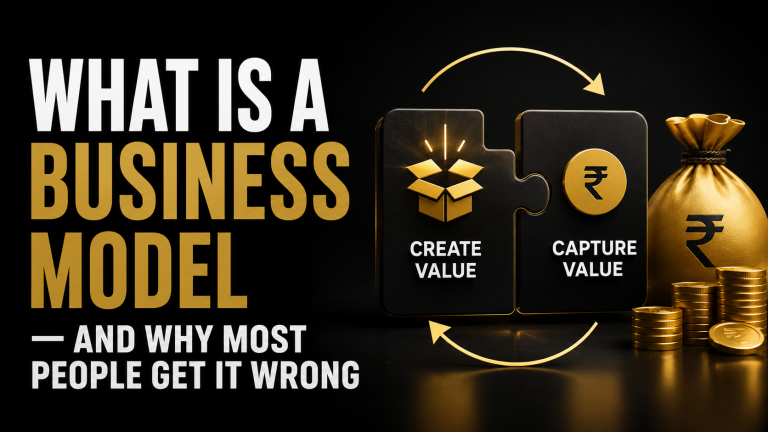
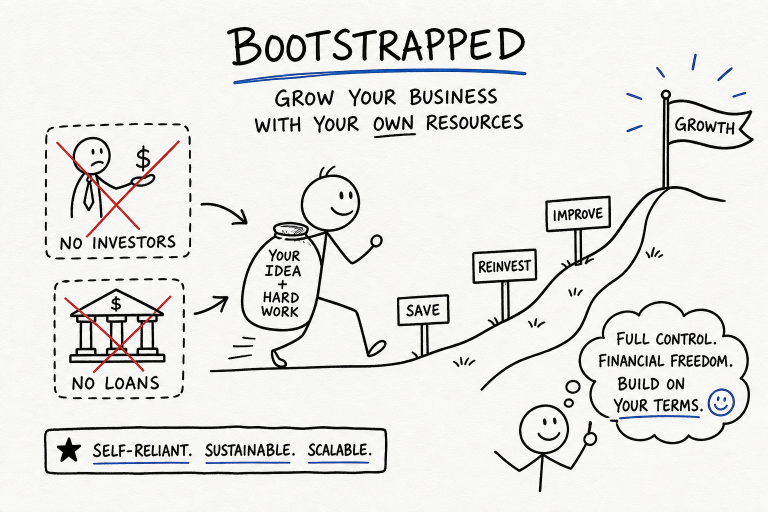
Bootstrapping means building a company using personal savings and revenue from the business itself, without outside investment. Venture-backed means accepting money from professional investors, usually venture capitalists, in exchange for equity and typically faster growth expectations. Both are legitimate paths. The right one depends on the type of business you’re building, how fast you want to grow, and how much ownership and control you want to keep.
Where to keep building your business vocabulary every week
A glossary gets you started. What actually makes the vocabulary stick is consistent, example-driven exposure, seeing these terms applied to real companies you follow, week after week, until they move from words you recognize to concepts you genuinely think with. Research also shows the practical benefits of workplace English for cross-border collaboration; see the ETS piece on English powering collaboration across Europe for one perspective on why this matters in professional settings.
Why consistent, example-driven learning beats cramming a glossary
Business vocabulary builds on itself. Once you know burn rate and runway, terms like “bridge round” and “default alive” start to make sense without much extra effort. Once you understand CAC and LTV, you can evaluate almost any consumer business model by asking two questions. The learning compounds, but only if you keep engaging with the material in context, not in isolation. This is the approach behind good workplace English and professional English education: not memorization, but repeated exposure through real examples. For a useful overview of how English functions in workplace learning, consult the Cambridge English “English at Work” executive summary.
CasualMBA: business concepts explained like your smart friend
CasualMBA is a free weekly newsletter that breaks down exactly these kinds of business concepts using startups and companies readers already follow. Each issue takes one framework, term, or business story and explains it the way a knowledgeable friend would over coffee, no textbook language, no academic fluff. For anyone who wants to keep building their business English vocabulary the practical way, subscribing to CasualMBA is the natural next step. Think of it as ongoing business English lessons grounded in real companies, not hypothetical case studies. If you’re ready to move from passive exposure to structured learning, a roundup of the best business English courses can help you find the right next step for your goals.
The language of business is learnable. Every term in this article covers a real idea that founders, investors, and operators use every single day. Understanding them doesn’t just make you sound more credible in meetings, it changes how you think. You evaluate opportunities faster. You spot problems earlier. And you communicate with the precision your audience expects.
The categories covered here, money, strategy, customers, and funding, are just the starting point. To keep learning English for business, the best move is sustained engagement: reading, listening, and seeing these terms applied to companies you actually care about. The vocabulary grows the more you work with it. The terminology was never the real barrier. Access was. Now you have both.